
Introduction
In Part 6, we understood what Backpropagation is and how it works mathematically. In Part 7, we implemented it from scratch and saw it in action using TensorFlow/Keras. We traced the flow of errors backward through the network and updated every weight and bias.
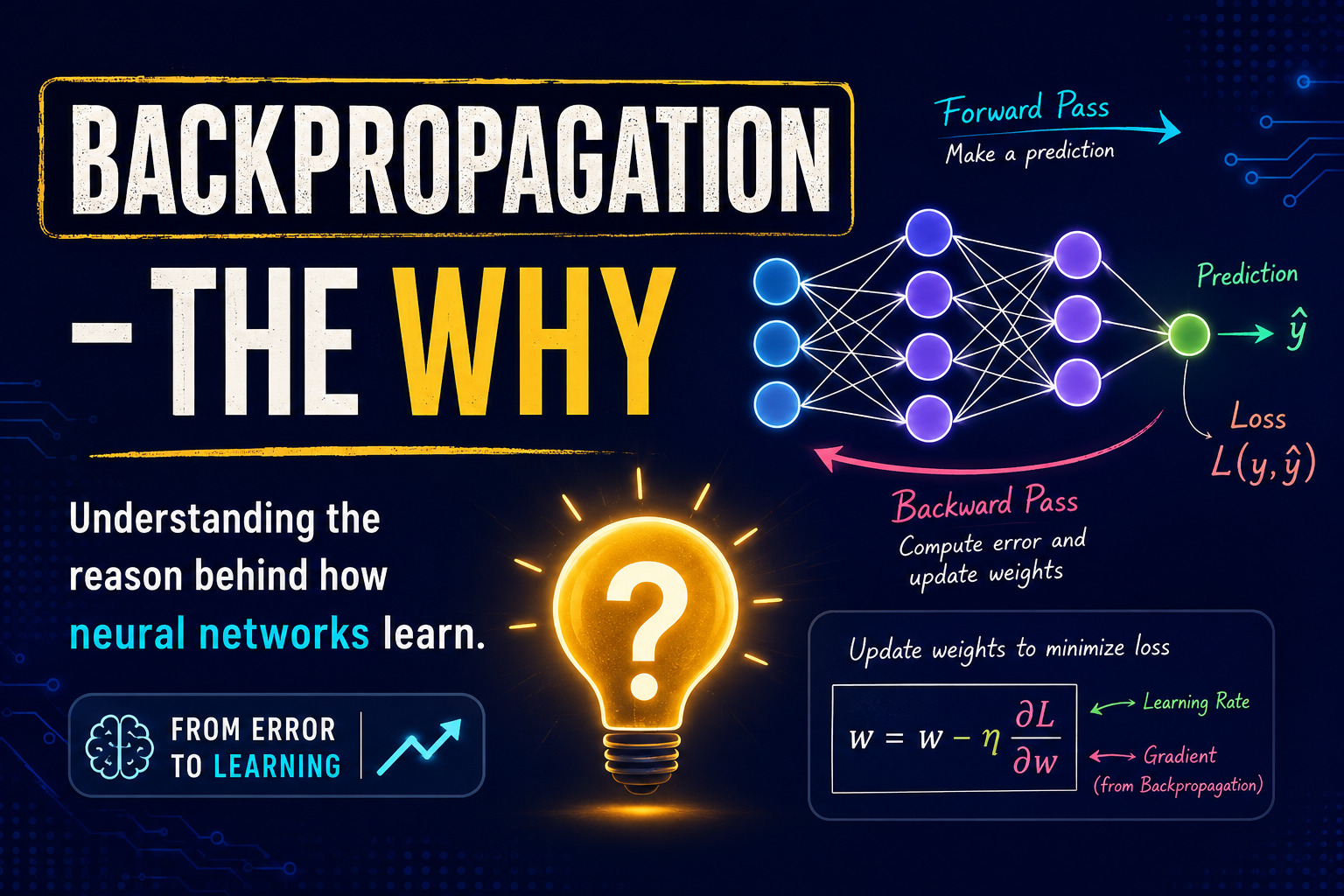
Now it's time to answer the most important question: Why does Backpropagation matter so much? Why is it considered the cornerstone of modern deep learning?
This blog will answer these questions. We'll explore why Backpropagation revolutionized artificial intelligence, what would happen without it, and where it still faces challenges.
"Ab hum Backpropagation ka 'Why' samjhenge."
Quick Recap: What is Backpropagation?
Before we dive into the "why," let's quickly recap what Backpropagation actually is.
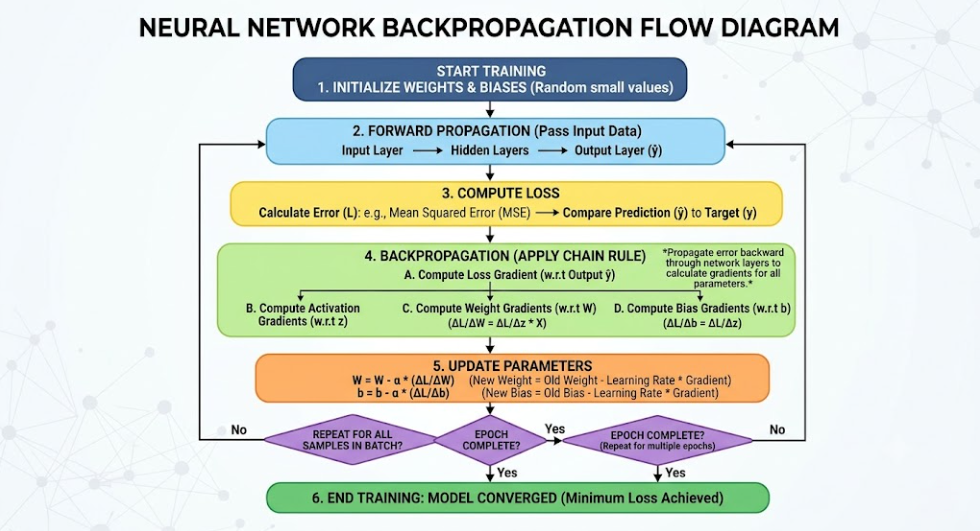
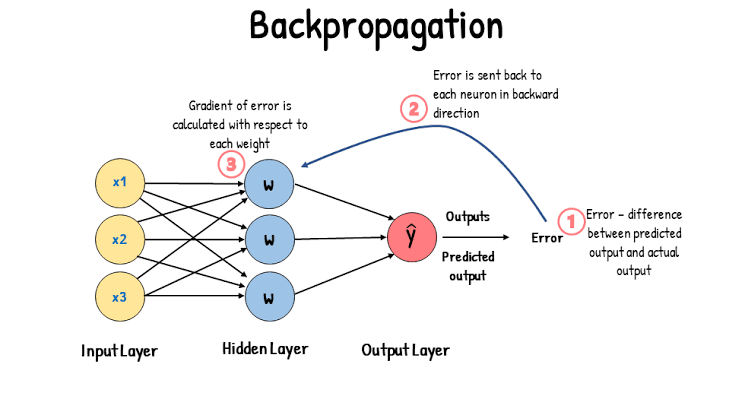
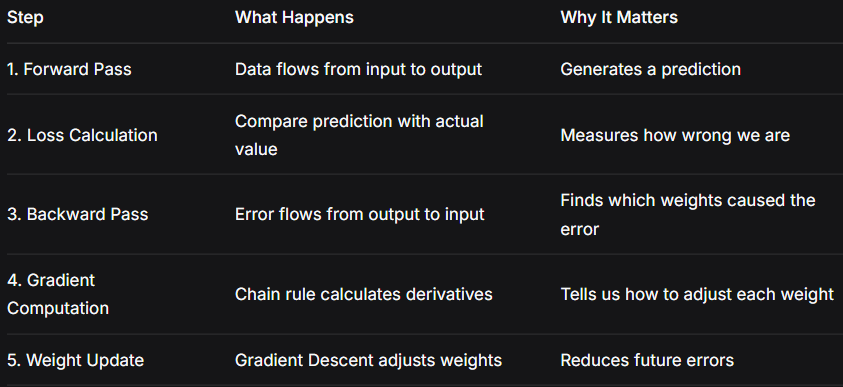
Backpropagation, short for "Backward Propagation of Errors," is the algorithm that trains neural networks. It works by:
-
Forward Pass: Pass input data through the network to get a prediction
-
Calculate Loss: Measure how wrong the prediction is using a loss function
-
Backward Pass: Propagate the error backward through the network
-
Compute Gradients: Use the chain rule to find how much each weight contributed to the error
-
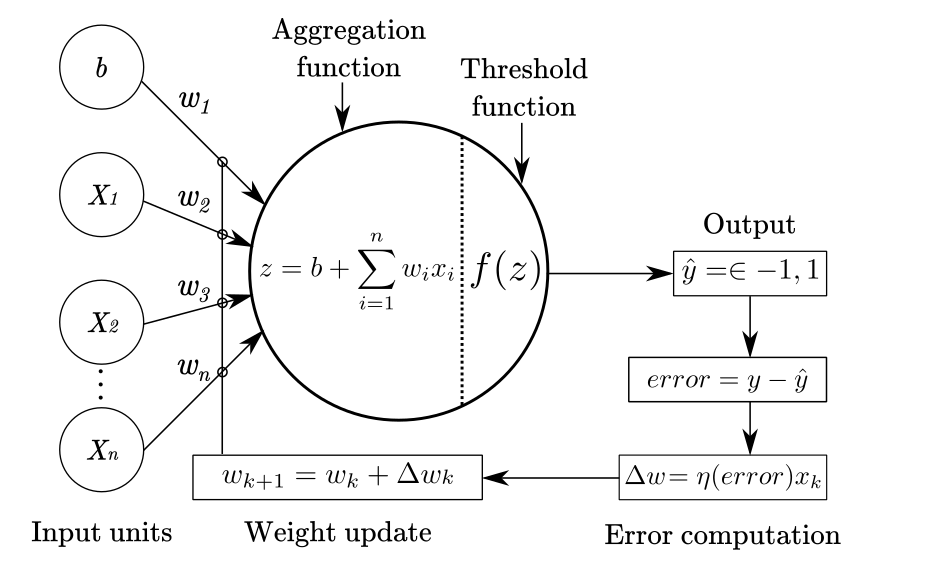
Update Weights: Adjust all weights and biases using Gradient Descent
"Yeh process repeat hota hai jab tak network seekh nahi jaata."
The Steps in Detail
Why Backpropagation is Important
Backpropagation is not just another algorithm. It is the engine that powers modern artificial intelligence. Here's why it matters so much.
1. It Makes Learning Possible
Without Backpropagation, neural networks would just be random connections. They would never learn anything useful. Backpropagation gives networks the ability to:
-
Learn from mistakes
-
Improve over time
-
Adapt to new data
-
Discover patterns automatically
"Backpropagation ke bina, neural networks andhe hain."
2. It Scales to Large Networks
Earlier learning algorithms could only handle simple, single-layer networks. Backpropagation works for networks with:
-
Hundreds of layers
-
Millions of parameters
-
Billions of training examples
This scalability is what makes deep learning possible.
3. It is Highly Efficient
Backpropagation computes all gradients in a single backward pass. This is incredibly efficient compared to other methods:
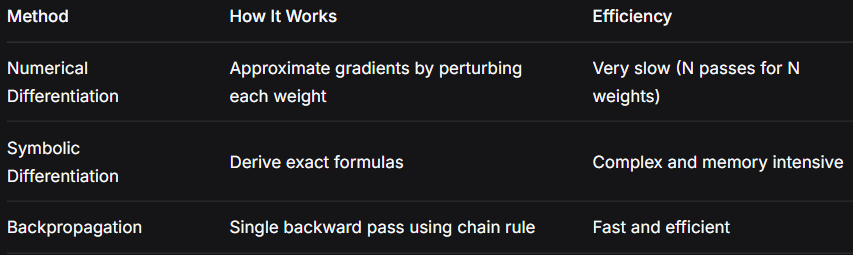
"Backpropagation ek hi pass mein saare gradients compute kar leta hai."
4. It Works for Any Differentiable Function
Backpropagation doesn't care what activation functions you use. As long as they are differentiable, the algorithm works. This flexibility allows:
-
Different activation functions for different problems
-
Custom loss functions
-
Complex architectures
5. It Enables Representation Learning
Backpropagation allows networks to learn their own features. Instead of hand-crafting features, the network discovers them automatically:
-
First layers learn simple features (edges, corners)
-
Middle layers combine them into patterns
-
Final layers recognize complex concepts
"Network khud apne features discover karta hai."
What Would Happen Without Backpropagation?
To truly appreciate Backpropagation, let's imagine a world without it.
The AI Winter of the 1970s
Before Backpropagation, researchers were stuck. They had the perceptron, but it could only solve simple, linearly separable problems. The XOR problem proved that single-layer networks were limited.
Minsky and Papert's 1969 book "Perceptrons" showed these limitations mathematically. Without a way to train multi-layer networks, research funding dried up. This was the first AI Winter.
"Backpropagation nahi tha, toh AI research ruk gayi."
Alternative Approaches
Researchers tried other methods to train neural networks:
Hebbian Learning (1949): "Neurons that fire together, wire together." This was too simple for complex tasks.
Perceptron Learning Rule (1958): Could only train single-layer networks.
Reinforcement Learning (1980s): Trial and error, but very slow.
None of these worked for deep networks. Backpropagation was the breakthrough that changed everything.
The World Without Backpropagation
Without Backpropagation, we would not have:
-
Image Recognition: No facial recognition, no self-driving cars
-
Natural Language Processing: No chatbots, no language translation
-
Recommendation Systems: No personalized recommendations
-
Medical Diagnosis: No AI-powered disease detection
-
Voice Assistants: No Siri, Alexa, or Google Assistant
"Backpropagation ke bina, modern AI exist nahi karta."
How Backpropagation Revolutionized Deep Learning
Backpropagation didn't just improve neural networks. It revolutionized the entire field of artificial intelligence.
The 1986 Breakthrough
In 1986, David Rumelhart, Geoffrey Hinton, and Ronald Williams published "Learning representations by back-propagating errors." This paper:
-
Showed how to train multi-layer networks
-
Demonstrated that networks could learn internal representations
-
Proved that the XOR problem could be solved
"1986 mein Backpropagation ne AI ko wapas zinda kar diya."
Milestones
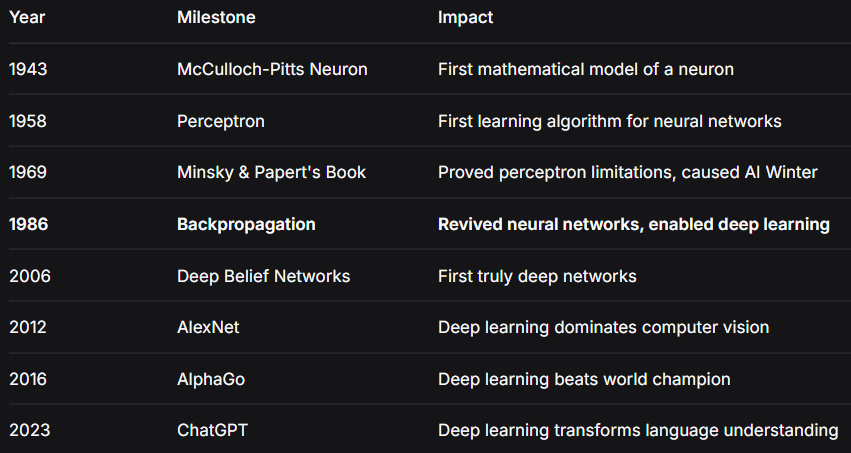
How It Changed Everything
Before Backpropagation:
-
Neural networks were shallow (1-2 layers)
-
Could only solve simple problems
-
Required hand-crafted features
-
Limited to academic research
After Backpropagation:
-
Neural networks became deep (100+ layers)
-
Can solve complex problems (image, speech, language)
-
Learn their own features
-
Power real-world applications
"Backpropagation ne neural networks ko science fiction se reality mein badal diya."
Advantages of Backpropagation
Why do researchers and engineers love Backpropagation?
1. Simplicity
The algorithm is surprisingly simple:
-
Forward pass: data flows forward
-
Backward pass: error flows backward
-
Weight update: adjust weights using gradients
"Conceptually simple, but incredibly powerful."
2. Efficiency
Backpropagation computes all gradients in O(N) time where N is the number of weights. This is optimal.
3. Parallelizability
The computations in each layer can be done in parallel. This makes it perfect for GPUs.
4. Versatility
Backpropagation works for:
-
Regression problems
-
Classification problems
-
Unsupervised learning
-
Reinforcement learning
-
Any differentiable function
5. Proven Track Record
Backpropagation has been used to train:
-
Image recognition systems
-
Language models
-
Self-driving cars
-
Medical diagnosis systems
-
Recommendation engines
"Har successful deep learning system Backpropagation use karta hai."
Applications and Use Cases
Backpropagation is everywhere in modern AI. Here are some applications beyond neural networks.
1. Image Processing
-
Image Classification: Identifying objects in images
-
Object Detection: Finding and locating objects
-
Image Segmentation: Pixel-level classification
-
Face Recognition: Identifying people
-
Medical Imaging: Detecting diseases from X-rays, MRI, CT scans
2. Natural Language Processing
-
Machine Translation: Translating between languages
-
Sentiment Analysis: Determining if text is positive or negative
-
Text Generation: Writing articles, stories, code
-
Chatbots: Conversational AI
-
Speech Recognition: Converting speech to text
3. Recommender Systems
-
Product Recommendations: Amazon, Netflix, Spotify
-
Content Personalization: News, videos, music
-
Ad Targeting: Showing relevant ads
4. Autonomous Systems
-
Self-Driving Cars: Perception, planning, control
-
Robotics: Manipulation, navigation
-
Drones: Autonomous flight
5. Healthcare
-
Disease Diagnosis: Cancer, diabetes, heart disease
-
Drug Discovery: Finding new medicines
-
Personalized Treatment: Tailored healthcare
6. Finance
-
Fraud Detection: Identifying suspicious transactions
-
Algorithmic Trading: Automated trading
-
Credit Scoring: Assessing creditworthiness
7. Scientific Research
-
Physics: Particle detection
-
Biology: Protein folding
-
Astronomy: Galaxy classification
Limitations and Challenges
Backpropagation is powerful, but it has limitations. Understanding these challenges helps us build better systems.
1. Vanishing Gradients
In deep networks, gradients become very small as they propagate backward. This means:
-
Early layers learn very slowly
-
Training takes much longer
-
The network may never converge
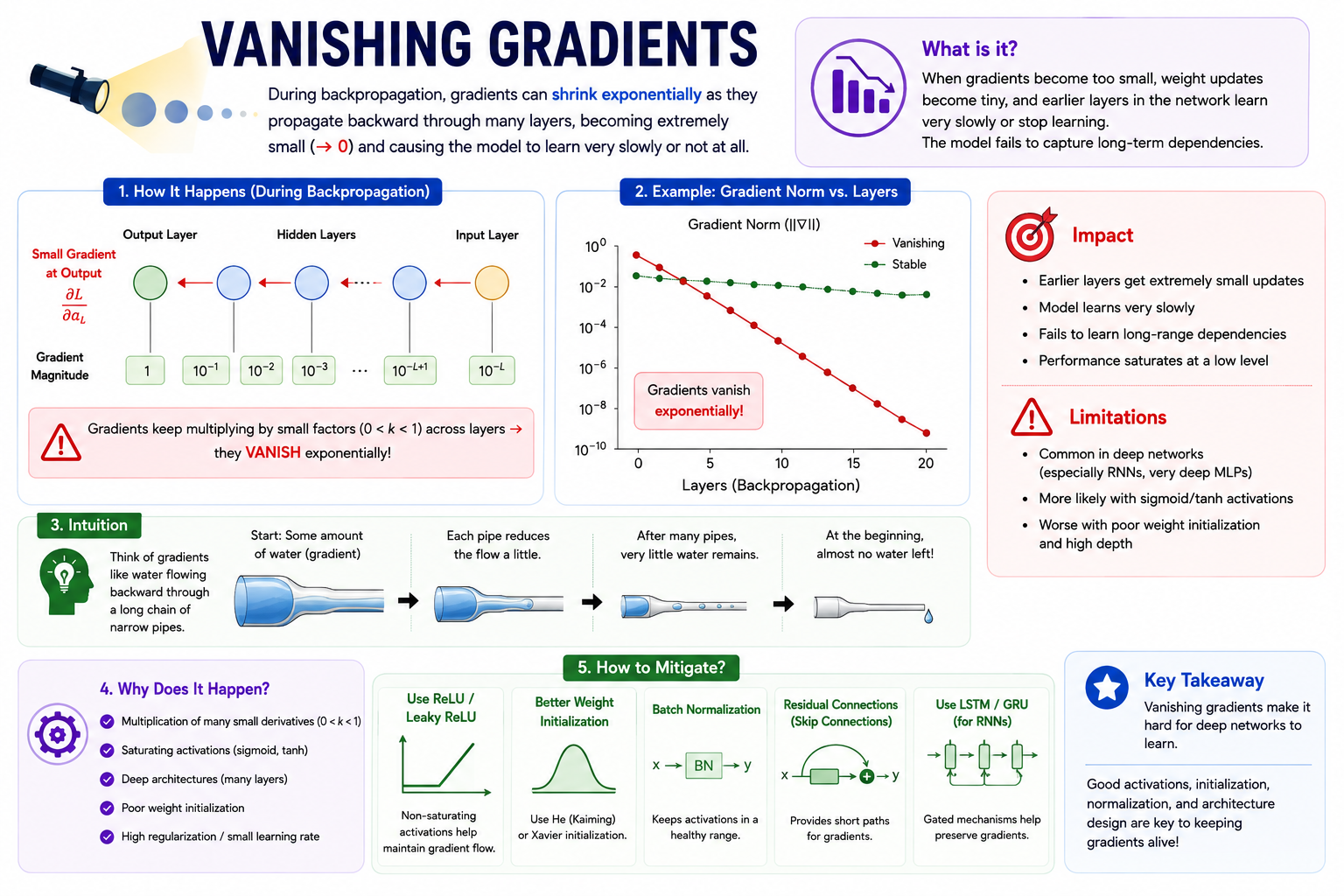
Why it happens: With sigmoid and tanh activations, gradients are less than 1. Multiplying many small numbers makes gradients vanish.
Solutions:
-
Use ReLU activation (gradient is 1 for positive values)
-
Use Batch Normalization
-
Use Residual Connections (skip connections)
2. Exploding Gradients
In some cases, gradients become very large. This causes:
-
Unstable training
-
Numerical overflow
-
The network diverges
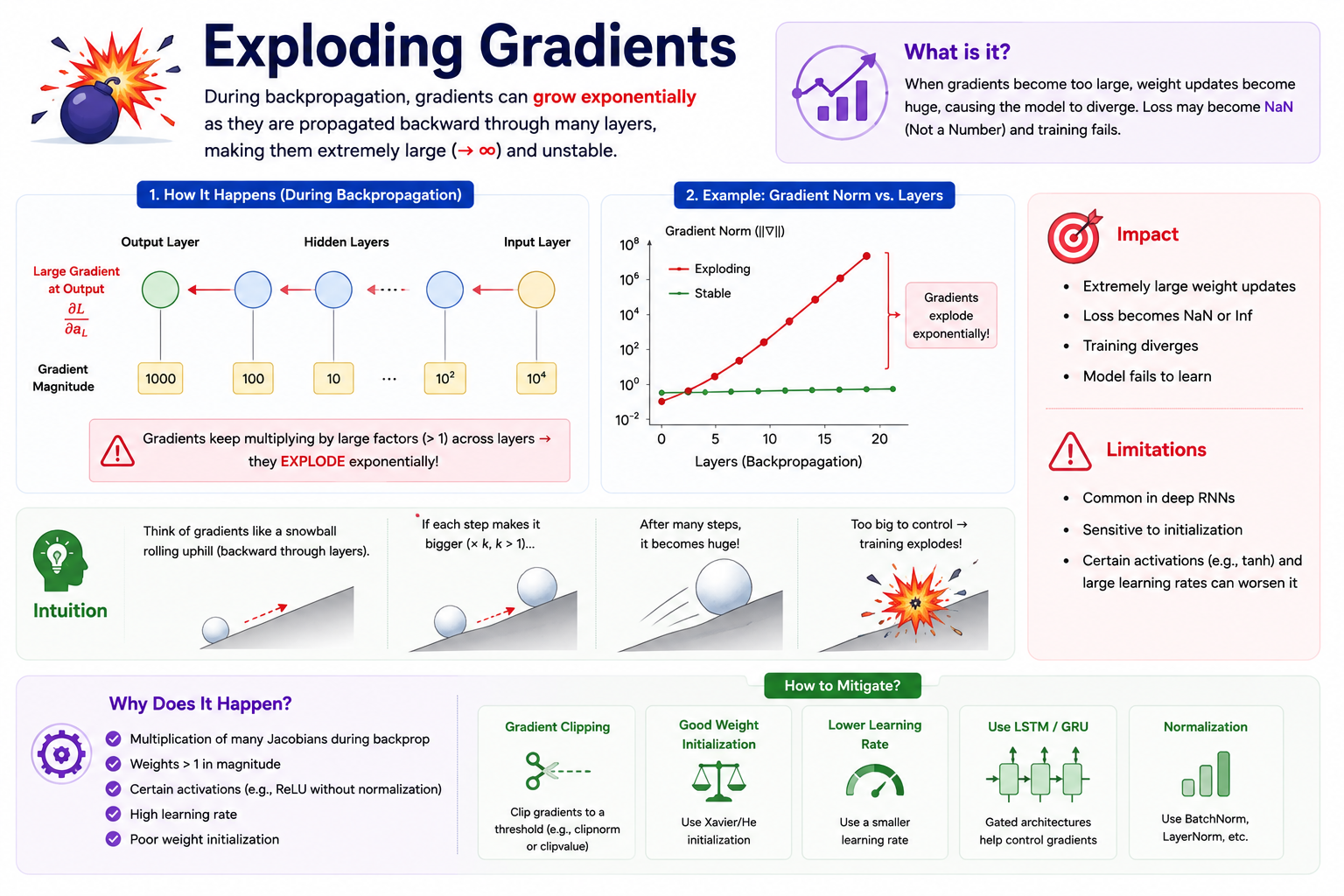
Why it happens: Large initial weights or unstable architectures cause gradients to grow exponentially.
Solutions:
-
Gradient Clipping (limit gradient values)
-
Proper weight initialization (Xavier, He initialization)
-
Smaller learning rates
3. Local Minima
Gradient descent can get stuck in local minima (not the global minimum). This means:
-
The network may not reach the best possible solution
-
Training may stop early
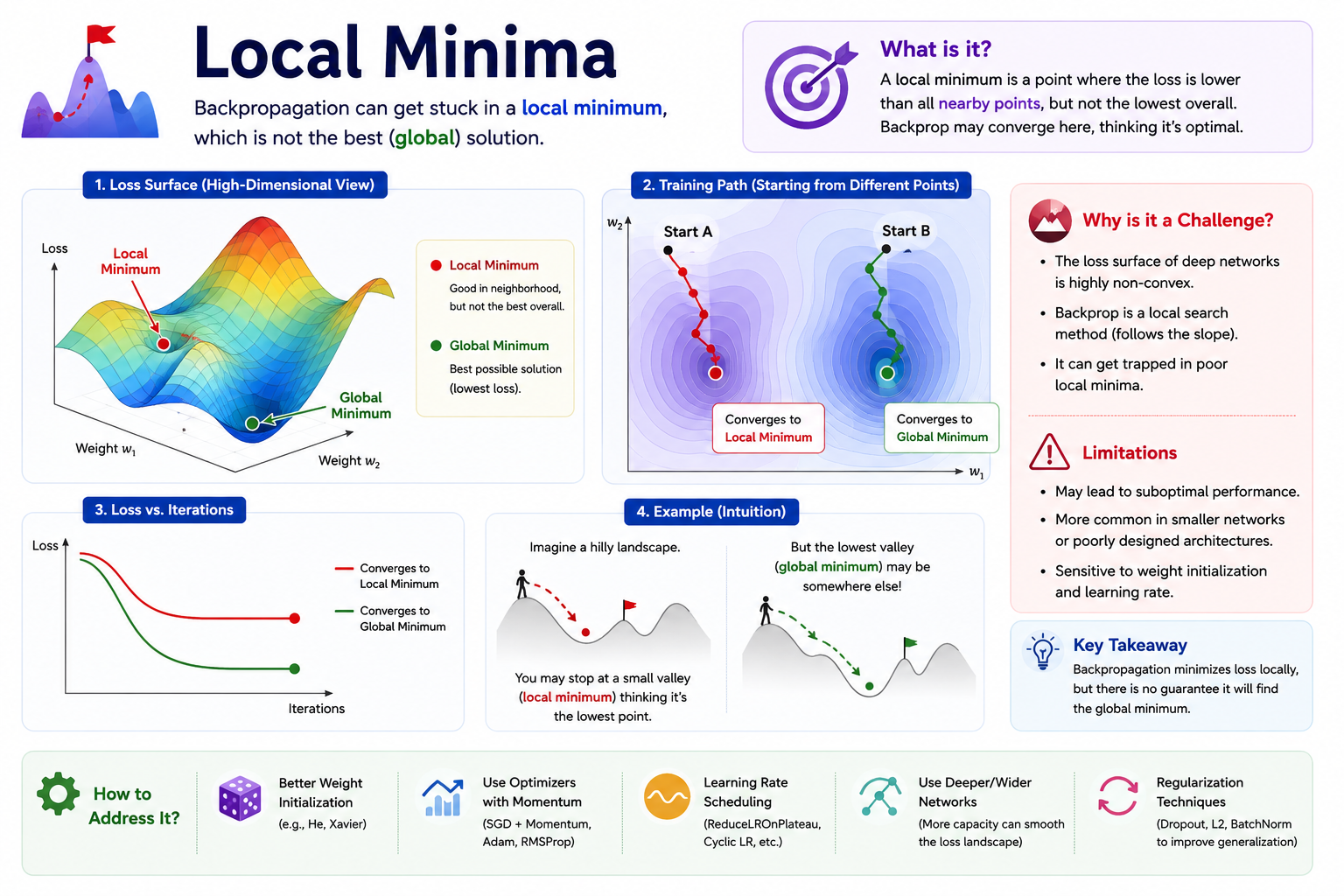
Why it happens: The loss landscape has many peaks and valleys.
Solutions:
-
Use Stochastic Gradient Descent (adds noise to escape local minima)
-
Use Momentum (helps escape local minima)
-
Use Adaptive Optimizers (Adam, RMSprop)
4. Overfitting
The network memorizes training data instead of learning general patterns. This means:
-
Works well on training data
-
Performs poorly on new data
Why it happens: The network has too many parameters for the amount of data.
Solutions:
-
Regularization (L1, L2)
-
Dropout (randomly turn off neurons)
-
Early Stopping (stop training when validation loss increases)
-
Data Augmentation (create more training data)
5. Computational Cost
Training deep networks is computationally expensive:
-
Requires powerful GPUs
-
Takes days or weeks to train
-
Consumes lots of energy
Why it happens: Deep networks have billions of parameters and need many training iterations.
Solutions:
-
Distributed Training (multiple GPUs, TPUs)
-
Model Pruning (remove unnecessary parameters)
-
Knowledge Distillation (train smaller models)
6. Sensitivity to Hyperparameters
Backpropagation is sensitive to:
-
Learning Rate
-
Batch Size
-
Number of Layers
-
Number of Neurons
-
Weight Initialization
Why it happens: Neural networks are complex, non-linear systems.
Solutions:
-
Hyperparameter Search (Grid Search, Random Search)
-
Bayesian Optimization
-
Automated Machine Learning (AutoML)
7. Lack of Interpretability
Deep networks are "black boxes." We often don't know:
-
Why the network made a particular decision
-
What features it learned
-
How to debug failures
Why it happens: Networks learn complex, non-linear representations.
Solutions:
-
Layer-wise Relevance Propagation (LRP)
-
Saliency Maps
-
Attention Mechanisms
8. Catastrophic Forgetting
When learning new tasks, networks forget previously learned tasks. This is a problem for:
-
Continual Learning
-
Multi-task Learning
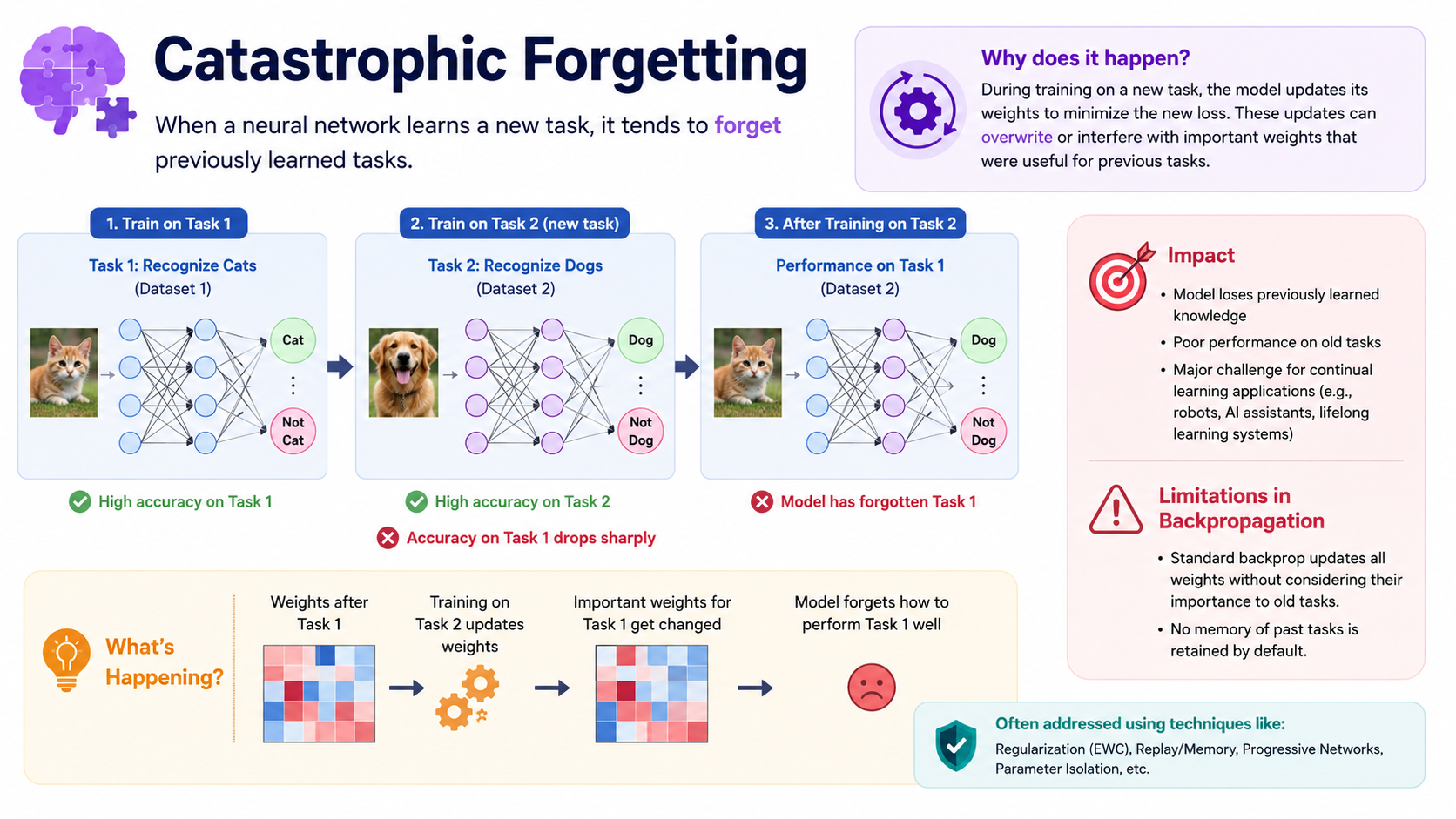
Why it happens: Weight updates for new tasks interfere with weights for old tasks.
Solutions:
-
Elastic Weight Consolidation
-
Progressive Neural Networks
-
Experience Replay
Overcoming the Limitations
Researchers have developed many techniques to overcome Backpropagation's limitations:
Modern Architectures
Residual Networks (ResNet): Skip connections allow gradients to flow through the network, solving the vanishing gradient problem.
Attention Mechanisms: Allow networks to focus on relevant parts of input, improving performance and interpretability.
Transformers: Use self-attention to process sequential data, powering modern language models.
Advanced Optimizers
Adam: Combines momentum and adaptive learning rates.
RMSprop: Adapts learning rates based on historical gradients.
Nadam: Adam with Nesterov momentum.
Regularization Techniques
Dropout: Randomly drops neurons during training to prevent overfitting.
Batch Normalization: Normalizes layer inputs to stabilize training.
Label Smoothing: Reduces overconfidence in predictions.
Transfer Learning
Instead of training from scratch, we can:
-
Start with pre-trained weights
-
Fine-tune on our specific task
This reduces training time and data requirements.
The Future of Backpropagation
Backpropagation has been the dominant algorithm for 37 years. But research continues:
Alternatives Being Explored
Forward-Forward Algorithm: Replaces forward and backward passes with two forward passes.
Equilibrium Propagation: Uses physical systems to compute gradients.
Hebbian Learning: Revisiting the idea that synapses strengthen when neurons fire together.
Spiking Neural Networks: Use spikes instead of continuous values.
But Backpropagation Remains
Despite these alternatives, Backpropagation remains the most successful and widely used algorithm for training neural networks. It has stood the test of time.
Conclusion
Backpropagation is more than just an algorithm. Without it, we wouldn't have facial recognition, self-driving cars, language models, or any of the AI systems we rely on today.
"Backpropagation ne AI ko possible banaya"
We started with a problem: the perceptron couldn't solve XOR. Backpropagation provided the solution. It showed us how to train multi-layer networks. It proved that neurons could learn complex patterns. It unlocked the power of depth.
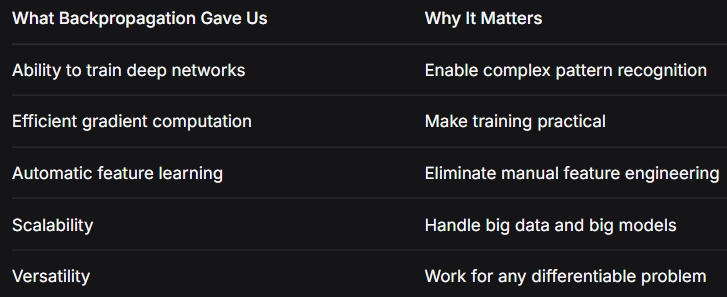
Today, Backpropagation is everywhere. It's in the phone in your pocket. It's in the apps you use. It's in the systems that keep you safe.
But learning never stops. The field continues to evolve. New algorithms and architectures are being developed. Yet Backpropagation remains at the heart of it all.
In the next part of this series, we'll continue our journey through the world of deep learning. We'll explore how optimization algorithms work, dive into advanced architectures, and understand what makes modern AI so powerful.
"Backpropagation ki kahani complete ho gayi, par deep learning ki kahani abhi jaari hai."
See you in Part 9!